Every off-plan launch in Dubai looks the same. A tower at golden hour, the skyline behind it, and a word like "iconic" somewhere on top. Buyers have seen hundreds of them. None of them answer the one question a buyer actually has before putting down 10% on something that doesn't exist yet: will it be finished, and will it be finished on time?

Real estate
Thabat Development
A developer that sells on its record, not its renderings.
The brand had to be built around the one thing a rendering can't show: a delivery record. So the lead line isn't about views or lifestyle. It's about towers handed over. Everything else follows the same rule: say the price, say the number of homes, say how the payment works. If a buyer has to ask, the ad hasn't done its job.
The work

Every angle comes from the same grid. A developer's mark should look engineered, because the product is.

The Arabic and English sit at equal weight. The Arabic is set on its own terms, not fitted under the English as a translation, and stretched so both lines end on the same edge.
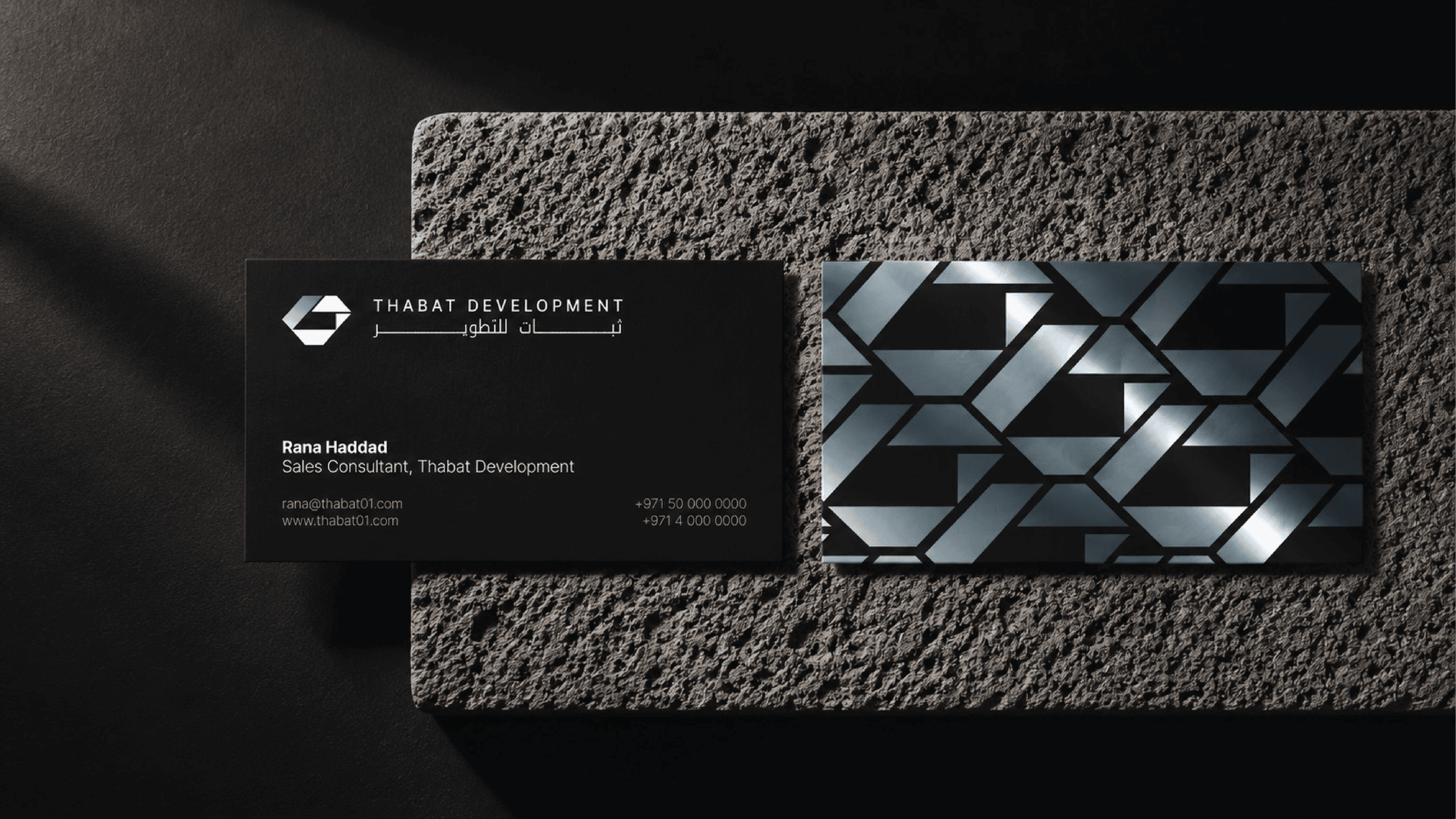
Black stock, silver foil pattern cut from the mark. The card is the first thing a sales consultant hands over. It should feel heavy in the hand.
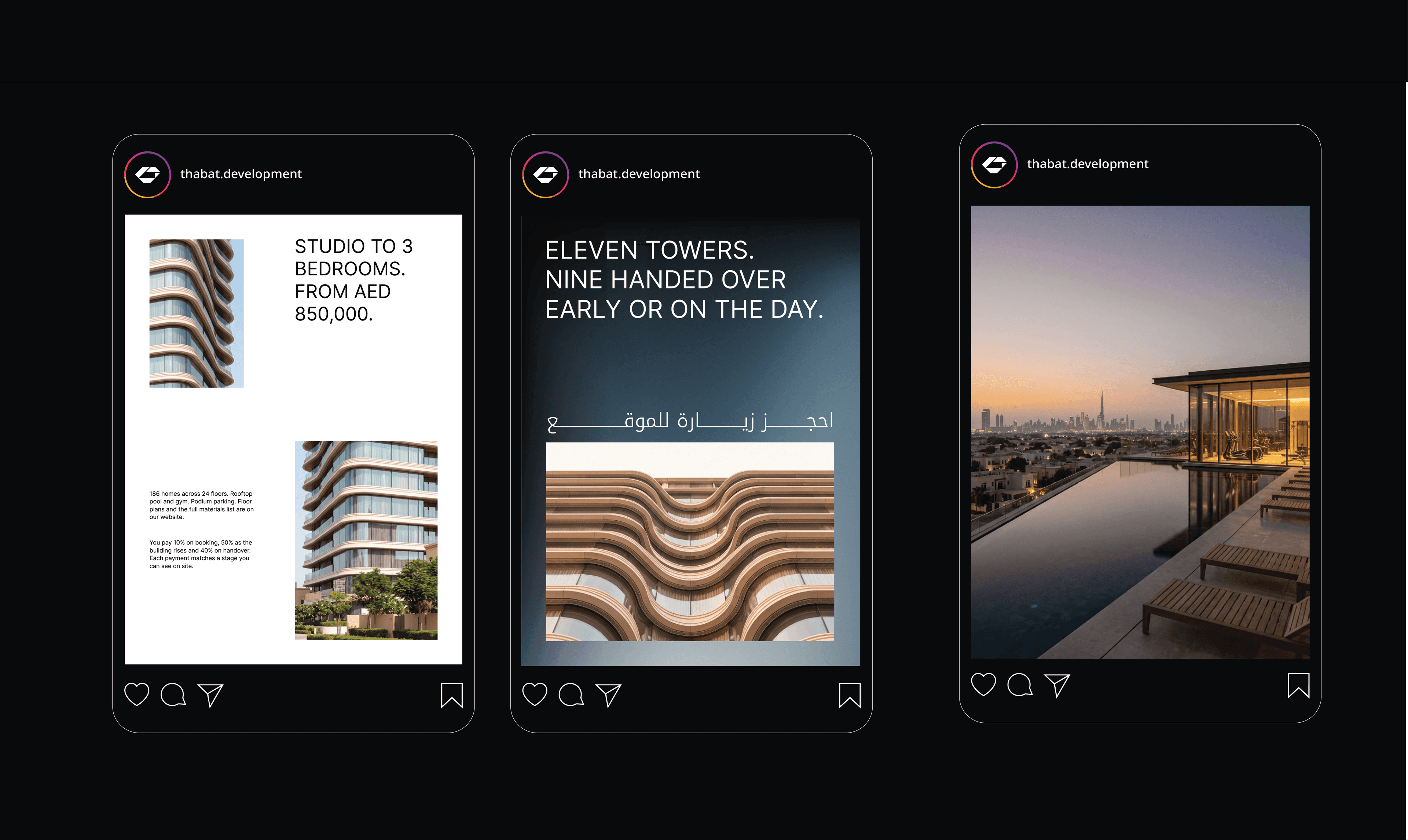
Three posts, three jobs. One gives the facts: unit types, starting price, payment plan. One gives the proof. One lets the building be looked at. No "exclusive", no "limited units remaining".
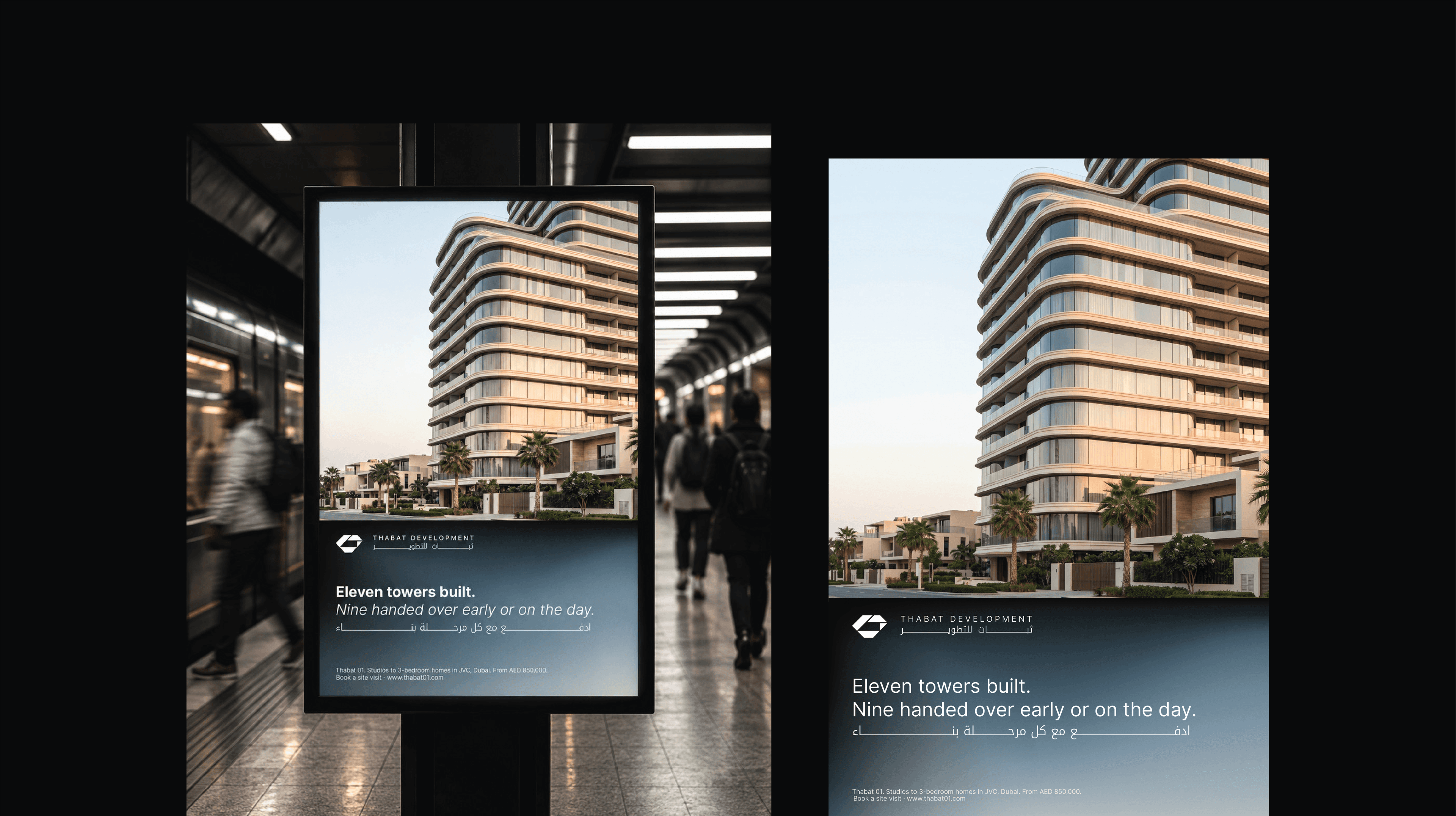
"Eleven towers built. Nine handed over early or on the day." Nine out of eleven, not eleven out of eleven. The two that were late are what make the nine believable.
Metro and street. One image, one line, the price in the small print. Someone walking past has about three seconds. That's enough for who, what and how much.
This is a self-initiated project, so there are no sales figures to show. What it shows is a system where every piece answers a buyer's question before they ask it. In a real engagement, the delivery numbers come from the developer's own records. If they can't be verified, they don't go on a poster.